Saltcraft / Recipes / Italian
No. 34Italian · Snack

Roasted Garlic & Rosemary Focaccia

I love bread, but this one had a job. The weekend's leftovers were always going to become sandwiches for Monday and Tuesday, and they deserved better than grocery-store sliced. So I spent a few hours on Sunday making a beautiful focaccia, with the Buffalo Bills on in the background, of course. It's about as foolproof as bread gets: simple seasoning, roasted garlic in the dough and on top, and a perfect result. I used regular all-purpose flour. Bread flour would make it a touch better, but don't let not having it hold you back. Mine was better than anything I could buy at the grocery store.
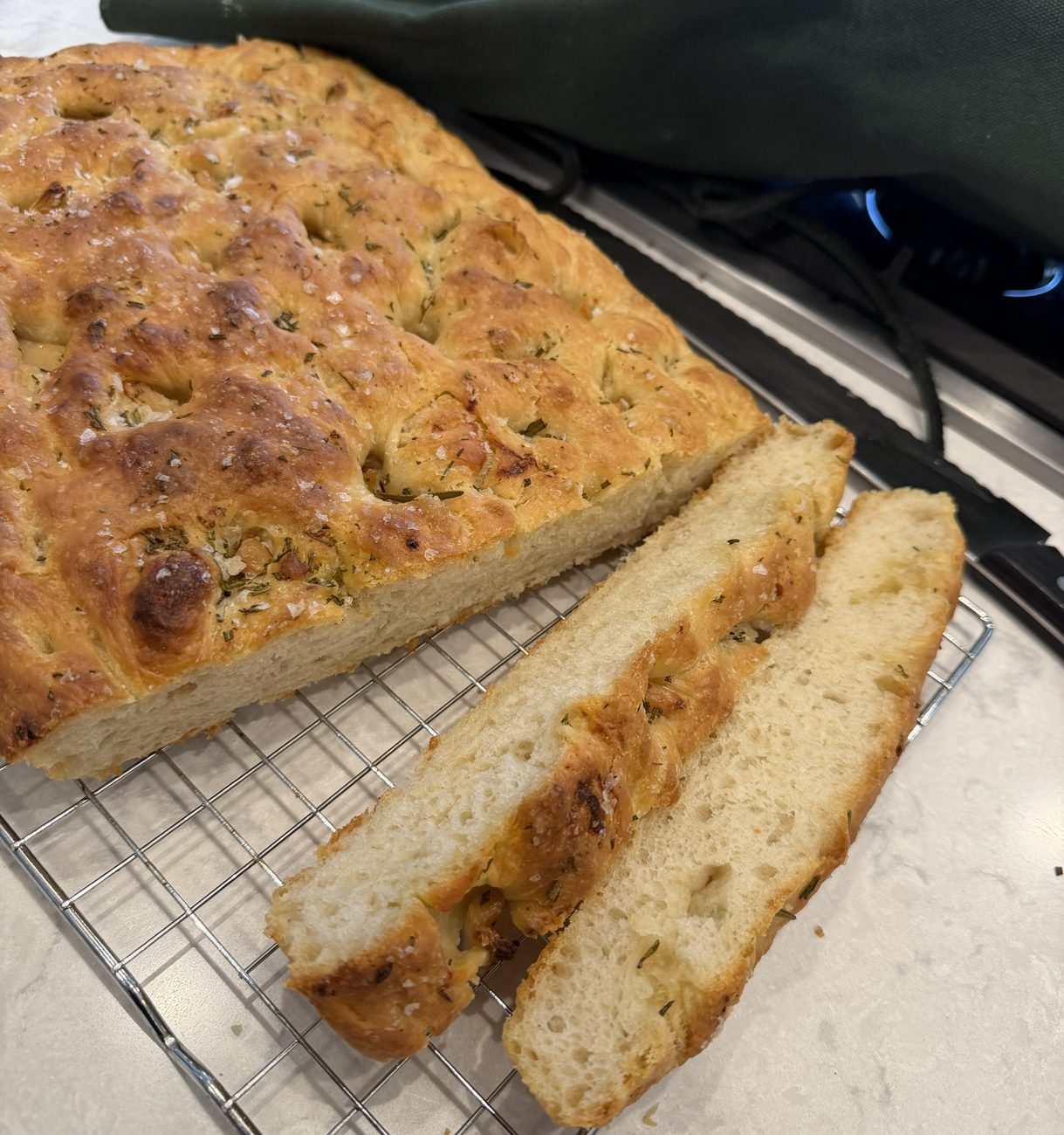
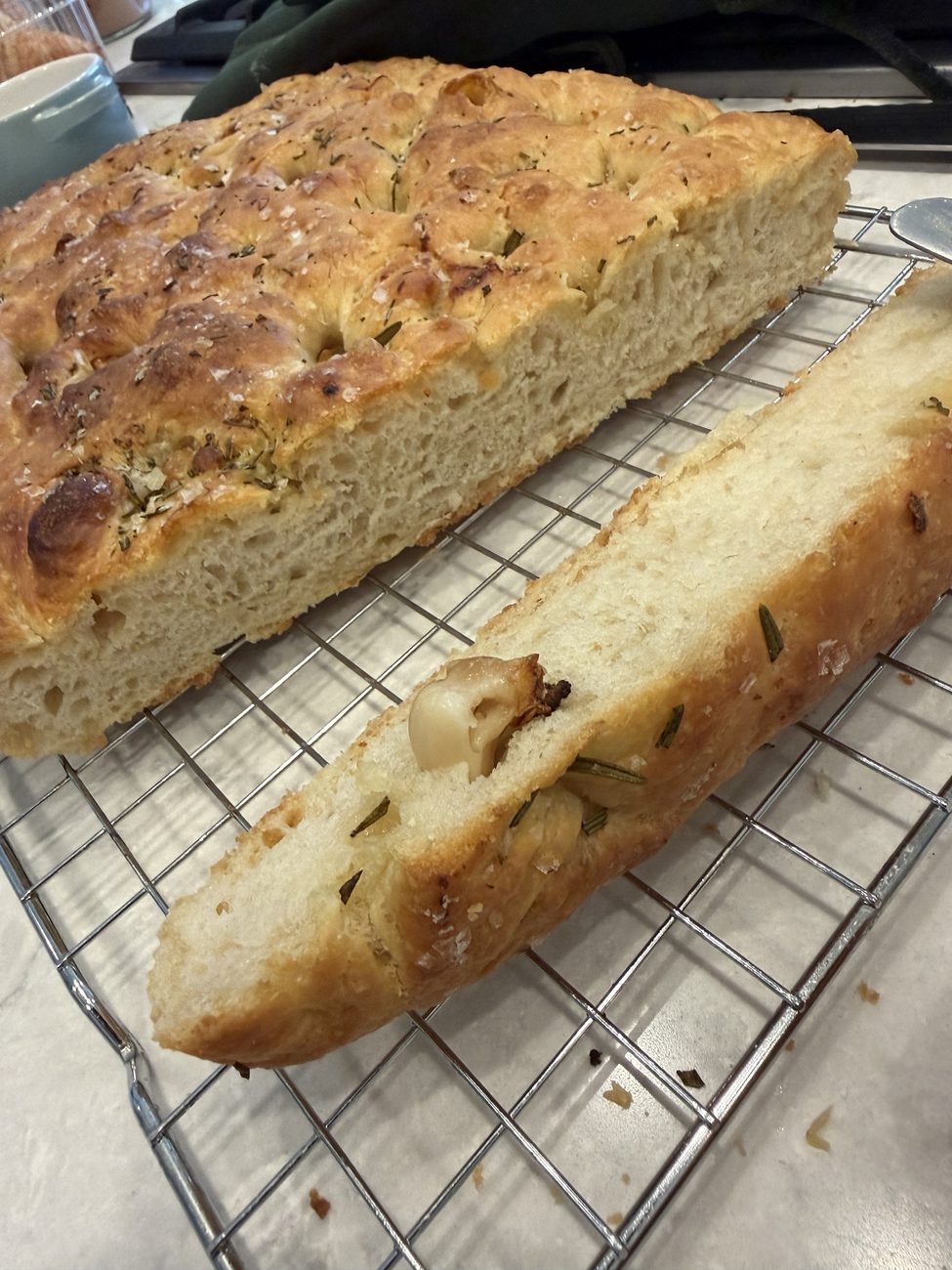
A golden slab of roasted garlic and rosemary focaccia on a cooling rack with two thick slices cut, showing an airy crumb
Shot on my phone, still warm.No. 34
Makes
1 large focaccia (12–16 pieces)
Total
4–5 hr, mostly waiting
Hands-on
30 min
Season
Year-round

Method

  1. Roast the garlic. Heat the oven to 400°F (200°C). Slice the tops off the garlic heads to expose the cloves, drizzle with olive oil and wrap loosely in foil. Roast for 40–55 minutes, until the cloves are completely soft, golden and sweet. Let them cool a little, squeeze out the cloves, and mash about half into a smooth purée. Keep the rest whole for the top.
  2. Mix the dough. In a large bowl, combine the flour, water, yeast, salt and olive oil. Mix with a sturdy spoon or spatula until no dry flour remains. It will be sticky and shaggy. Cover and rest for 15 minutes.
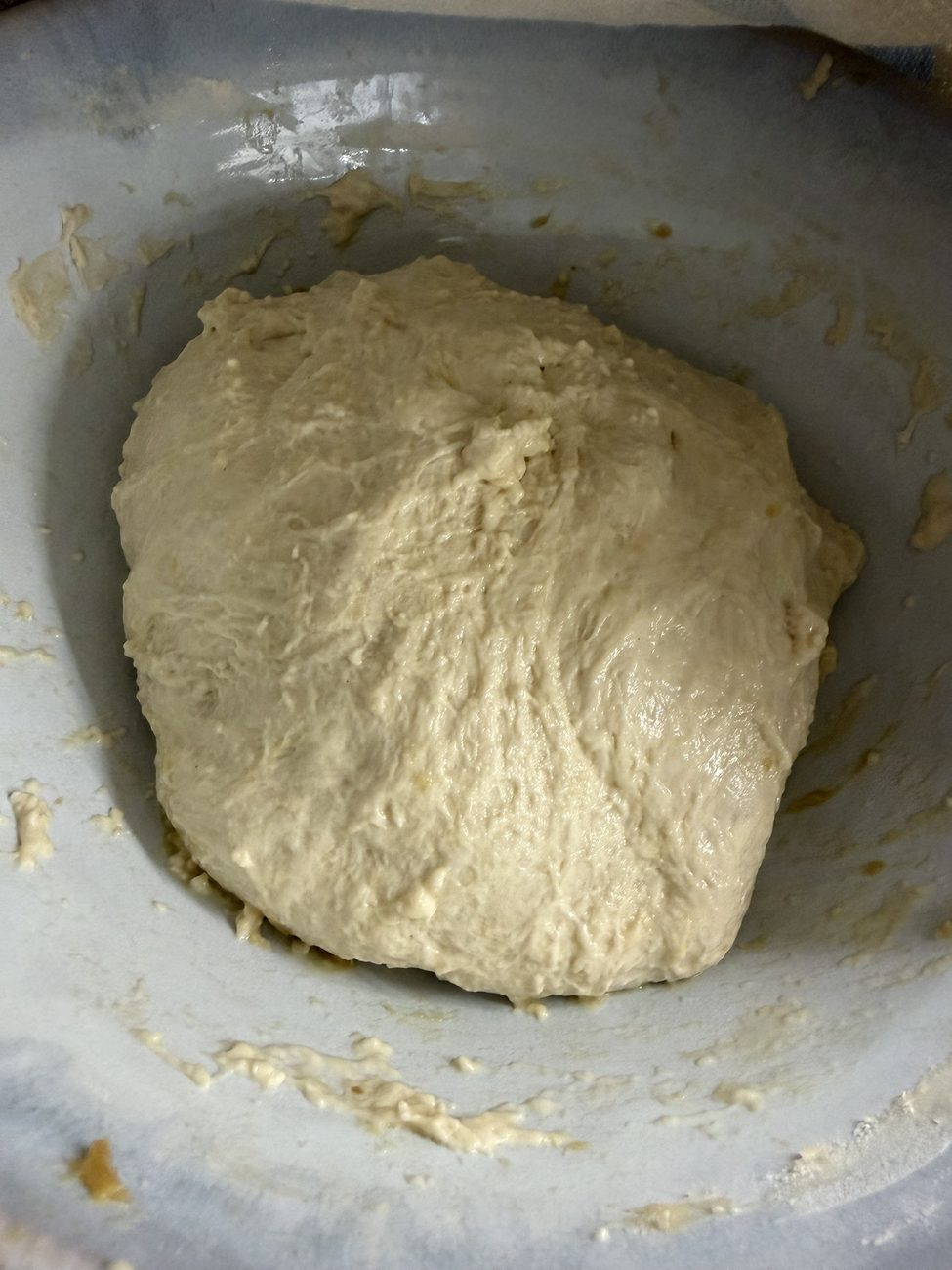
  3. Stretch and fold. With lightly wet or oiled hands, lift one side of the dough, stretch it up and fold it into the centre. Turn the bowl and repeat on all four sides. Cover and rest 15 minutes. Do 2–3 more sets, resting 15 minutes between each, and work the roasted garlic purée in during the second set. The dough will get smoother, stretchier and easier to handle as you go.
  4. First rise. Cover and leave somewhere warm until the dough is airy and roughly doubled, usually 45–90 minutes after the last fold. Warmer kitchen, faster rise.
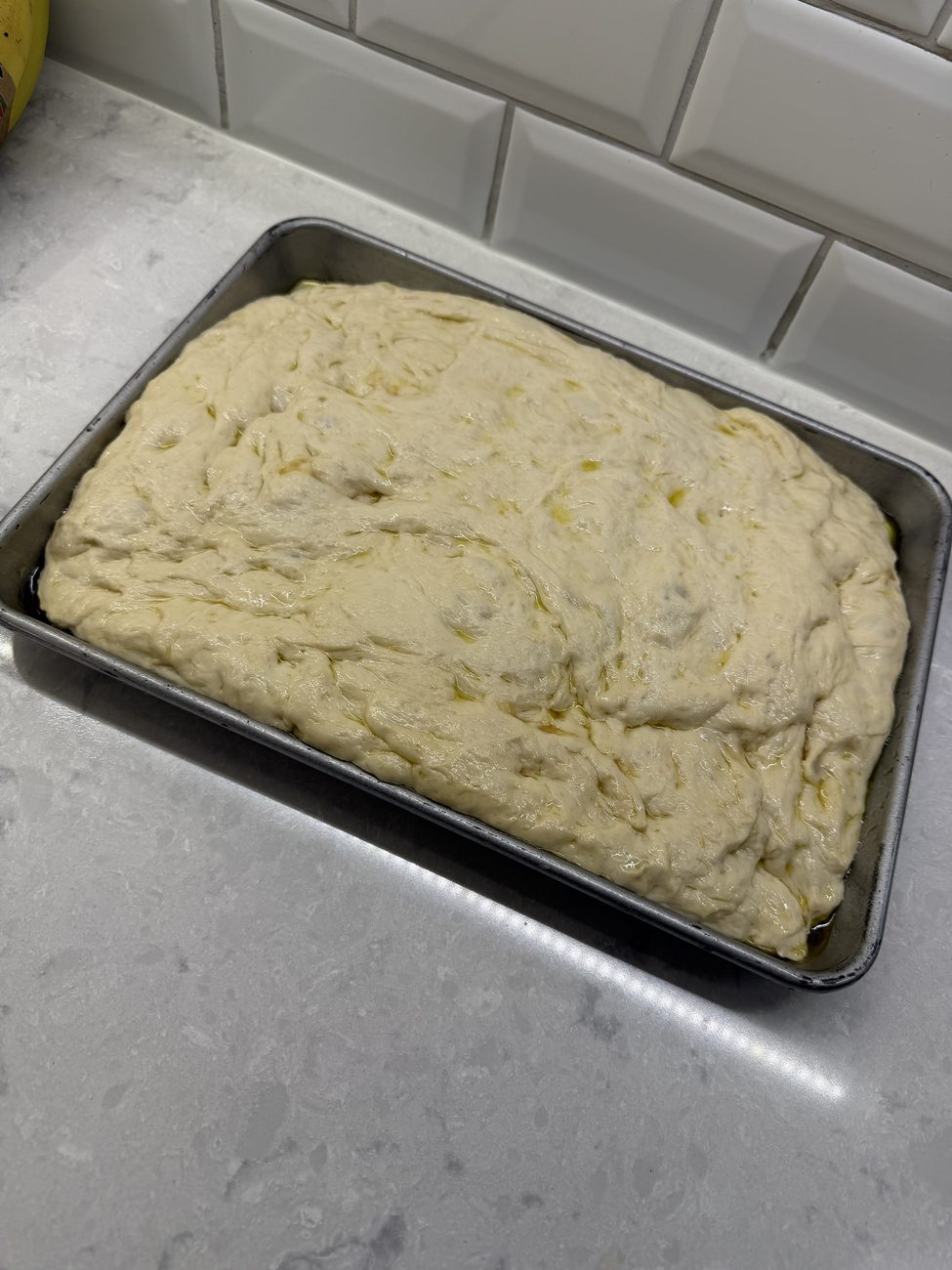
  5. Pan it. Generously oil a 9×13-inch metal baking pan. Tip the dough in and turn it to coat it in oil. Stretch it toward the corners without forcing it; if it fights back, let it rest 10–15 minutes and try again. Cover loosely and let it rise 30–60 minutes, until very puffy, bubbly and jiggly.
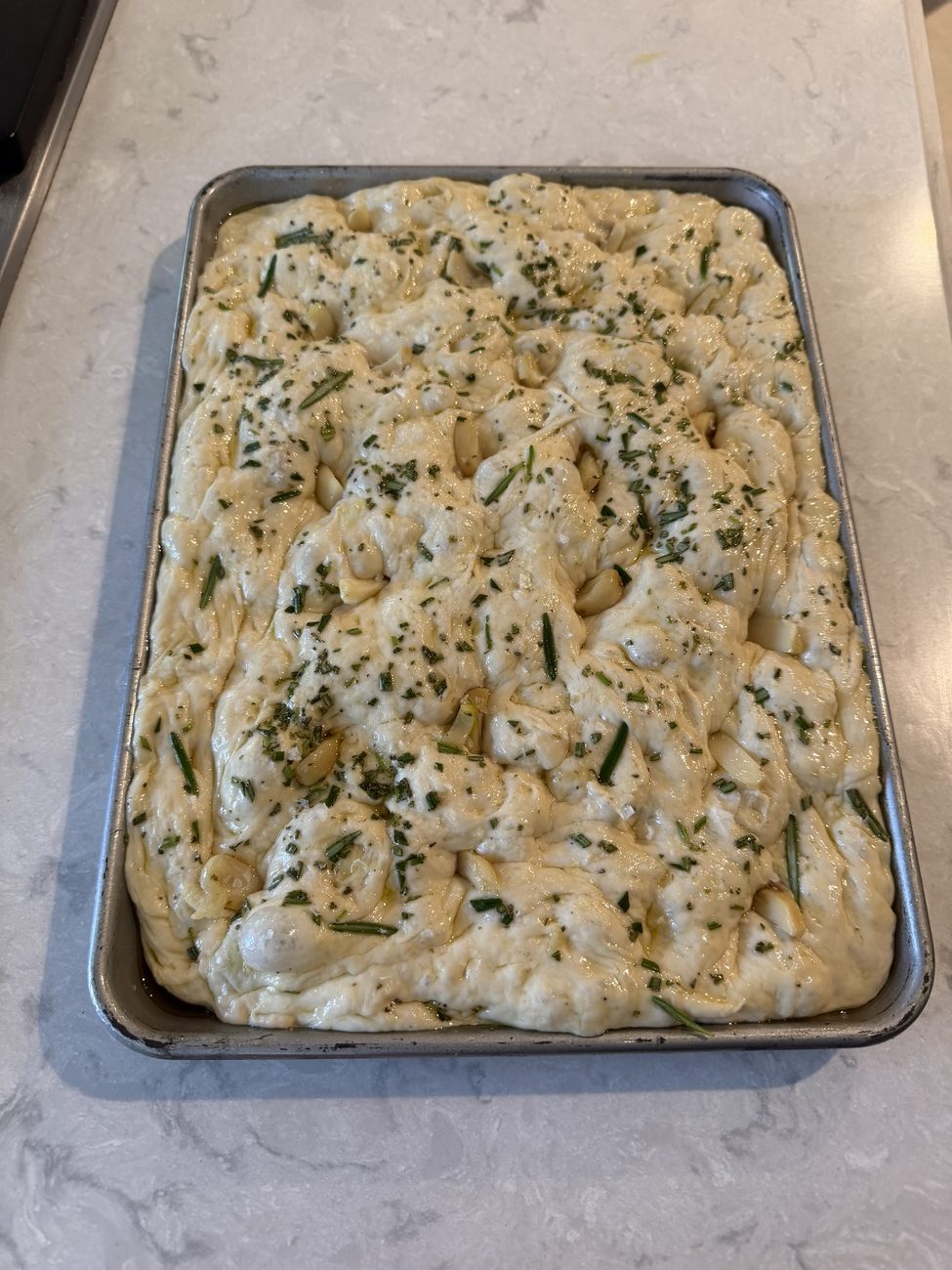
  6. Dimple and top. Heat the oven to 450°F (230°C), regular bake. Stir the rosemary into 2 tbsp olive oil and drizzle it over the dough. With oiled fingertips, press deep dimples all over, almost to the bottom of the pan, without tearing it. Press the reserved garlic cloves into the dimples and sprinkle with flaky salt.
  7. Bake. Bake on the lower-middle rack for 25–30 minutes, turning the pan if it's browning unevenly. It's done when the top is deeply golden, the edges are crisp and pulling away from the pan, the bottom is golden and crisp, and the centre reads about 200–205°F (93–96°C). If the top is done but the bottom is pale, slide the focaccia out of the pan onto a metal baking sheet for another 2–4 minutes.
  8. Cool, then slice. Let it sit in the pan 3–5 minutes, then move it to a rack and brush with a little more olive oil while it's warm. Give it at least 15–20 minutes before you slice. Warm or room temperature, both good.

From my kitchen

  • Pick your flour. I used all-purpose (with 375 g water) and it was perfection: a slightly tighter, tender crumb. Bread flour (with 400 g water) makes a wetter dough and a chewier, more open crumb, so it's a small upgrade if you have it. Every brand drinks water a little differently, so adjust slightly if you need to.
  • Roast the garlic all the way. Soft, sweet and golden, not sharp or bitter. Pale garlic tastes raw in the bread.
  • Garlic goes in, not just on. The purée in the dough is why every bite tastes like roasted garlic, not just the bites with a clove in them.
  • Don't be shy with the oil. Plenty in the pan is what makes that crisp, almost fried bottom.
  • Watch the dough, not the clock. You want it puffy, bubbly and jiggly before it bakes. A cold kitchen just means a longer nap.
  • Dimple like you mean it. Deep dimples hold the oil and the garlic, and make it look like focaccia.
  • Bake it dark. Deeply golden is the goal. Pale focaccia doesn't get the same crust.
  • Leftovers. Wrap tightly at room temperature for up to 2 days, or freeze in portions for up to 2 months. Reheat at 350°F, or warm slices in a skillet with a little olive oil to bring the crust back. Leftovers also make excellent toasted sandwiches.
  • How we're eating it. Split for sandwiches with the leftover prosciutto and salami from an epic fall charcuterie board, or spread with my whipped feta. But honestly, throw on whatever makes you feel good. It's also great next to soup, salad, roast meats or pasta, or just dragged through good olive oil with flaky salt.

For the kids

Give them the dimpling job. Oiled fingertips, poking holes in dough on purpose: they will never be more helpful in the kitchen.

A shaggy ball of focaccia dough in a bowl after its folds
After the folds.
Risen focaccia dough stretched into an oiled sheet pan
Puffy, bubbly, jiggly.
Dimpled focaccia dough topped with rosemary, roasted garlic cloves, olive oil and flaky salt
Dimpled and dressed.
A slice of focaccia with a whole roasted garlic clove baked into it
The garlic you get to find.
The squish test. Passed.

To drink

Easy A glass of whatever red is open.

A step further A chilled Lambrusco. Fizzy, a little dry, and very good with bread and salt.

Zero proof Sparkling water with a twist of lemon and a sprig of rosemary.

Richly yours, H

The Saltcraft letter

Liked this one? There's more where it came from.

New recipes, the next travel guide, and what I'm making this week. No ten-paragraph preamble. Unsubscribe whenever; I won't take it personally.

Make this next

All recipes