Saltcraft / Recipes / Italian
No. 05Italian · Dinner

Michael's Bolognese

This is my husband Michael's favourite food, so it gets made a lot, and always by the potful. It's built on Marcella Hazan's classic, and I follow her one rule I won't negotiate on: milk first, wine second, tomatoes last, and then we wait. My big departure is spicy Italian sausage in place of some of the pork, for a little heat and fennel without turning it into arrabbiata having an identity crisis. One giant batch becomes pasta tonight, lasagna next week, and spaghetti squash when we're "being good."

Handwritten: Michael's favourite. Love you, Boo.
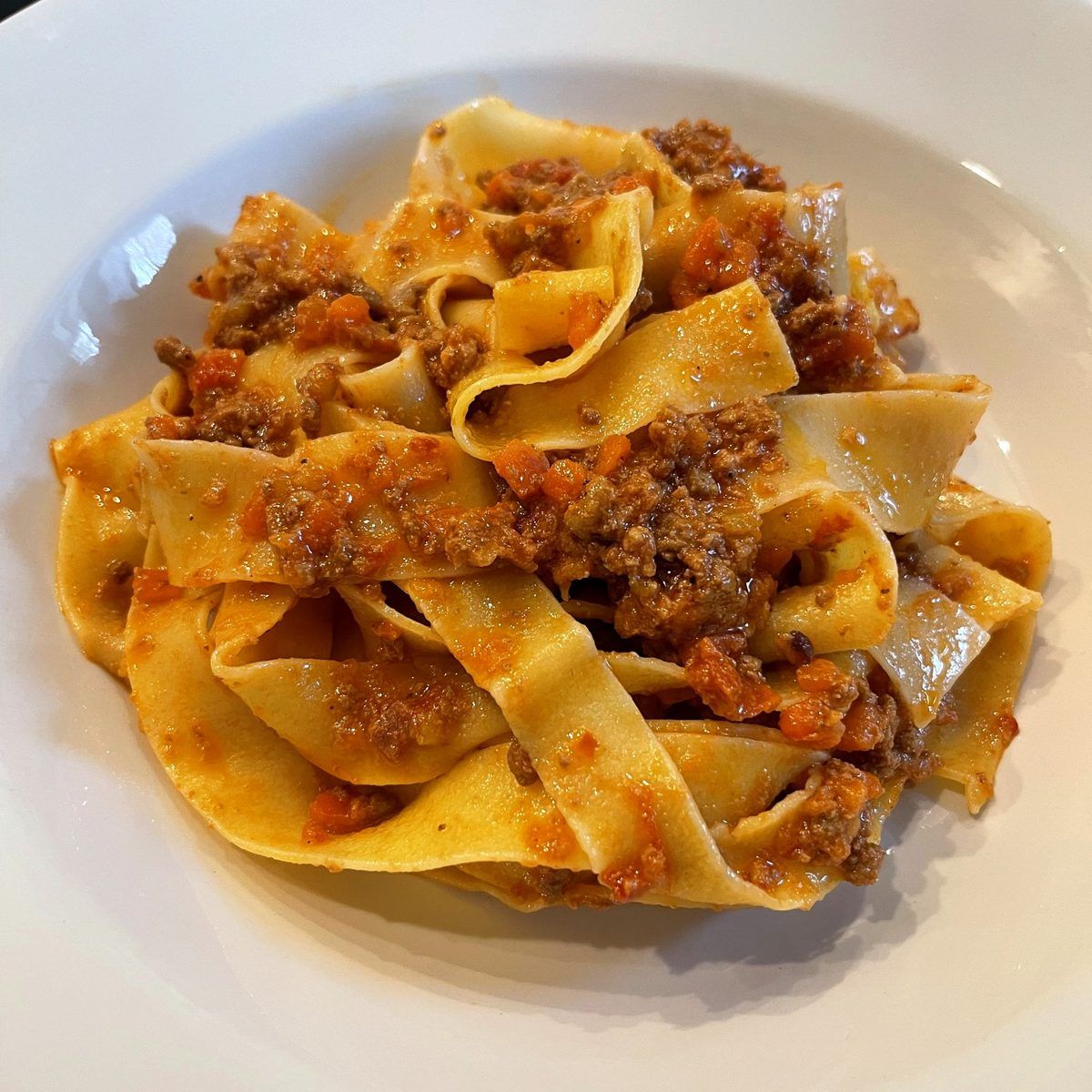
Pappardelle tossed in a rich bolognese in a white bowl
Shot on my phone.No. 05
Serves
8–10
Total
4–5½ hr
Hands-on
45 min
Season
Fall / Winter

Method

  1. Start with the vegetables. Slowly. Melt the butter with the oil in a large, heavy Dutch oven over medium-low heat. Add the onion, carrot and celery with a pinch of salt and cook gently for 10–15 minutes, until soft and sweet. You're not after colour; you want vegetables that will practically disappear into the sauce. If things are browning, turn it down. This is a marathon.
  2. Add the meat, then mash it. A lot. Turn the heat to medium and add the beef and sausage. Now take a wooden spoon or spatula and break it down relentlessly: press, chop, scrape, repeat, for longer than feels reasonable. You want the meat in tiny, fine crumbs, not chunks, with the sausage spread evenly through the beef. This is what gives proper bolognese its soft, almost silky texture. Keep going until there's no raw colour left and most of the moisture has cooked off. Season lightly; the sausage is already seasoned.
  3. Milk first. Trust Marcella. Pour in the milk, add the nutmeg and keep it at a gentle simmer, stirring now and then, until the milk has almost completely cooked away, 20–35 minutes. It will look a little strange. That's fine. The milk is what makes the meat tender and gives proper bolognese its soft, rich character. Don't skip it, don't swap in stock, and please don't add the tomatoes yet.
  4. Now the wine. Pour it in, scrape up anything stuck to the bottom, and simmer until it's nearly all evaporated and the sharp alcohol smell is gone, another 15–25 minutes. A perfectly reasonable time to pour yourself a glass.
  5. Finally, the tomatoes. Stir them in with their juices, bring just to a simmer, then drop the heat to its lowest setting. You want the occasional lazy bubble, not a boil. Leave it uncovered, or loosely covered if it's reducing too fast.
  6. Let time do the work. Cook for at least 3 hours, ideally 4 or 5, stirring now and then. If it looks dry or starts to stick, add a splash of water; there's no shame in it. The fat may separate a little. Stir it back in. Taste near the end and adjust the salt and pepper. You want a rich, meat-forward sauce, not a vat of tomato sauce with some beef floating in it.
  7. Serve it properly. Cook the pasta in well-salted water until just shy of al dente and save a cup of pasta water. Toss the pasta with a generous amount of sauce and a splash of pasta water over medium-low heat until it's glossy and coated, add that knob of butter if you like, and serve with plenty of Parmigiano. And for the love of good food, don't just ladle sauce over a pile of naked pasta. Toss it together.

From my kitchen

  • Three dinners, one pot. Pasta the first night. Lasagna later: it's thick enough to layer with béchamel and pasta sheets without a soupy disaster. And spaghetti squash when we're watching it. Michael approves of all three.
  • Mash the meat. Then mash it more. The fine, even crumb is non-negotiable. If you can still see meatball-sized bits, you're not done. Your arm will feel it. Worth it.
  • The sausage. Hot Italian is my favourite; mild works beautifully too. If yours is very spicy, use a little less. You want warmth and depth, not to blow anyone's head off.
  • The meat. Beef and pork is traditional for a reason, but beef and veal, beef and sausage, or three or four meats all work. Just don't use only extra-lean beef. A little fat is part of the magic.
  • The tomatoes. Resist adding more. This is a meat sauce, not a tomato sauce.
  • The wine. Dry white, with enough acidity to cut the richness. Dry vermouth works in a pinch.
  • Garlic. There isn't any. I know. You'll survive. Marcella knew what she was doing.
  • Make more than you need. The difference between two pounds of meat and five is mostly the size of the pot and a bit more chopping. It freezes beautifully for up to three months; cool it promptly, portion it, and thaw overnight in the fridge.
  • Credit where it's due. Inspired by Marcella Hazan's Bolognese in Essentials of Classic Italian Cooking, with a little more sausage, a little more attitude, and enormous respect for the original.

For the kids

Use mild sausage and nobody under ten will notice it was ever spicy.

To drink

A good red Burgundy, or whatever's left of the white you cooked with. A Sunday afternoon either way.

Richly yours, H

The Saltcraft letter

Liked this one? There's more where it came from.

New recipes, the next travel guide, and what I'm making this week. No ten-paragraph preamble. Unsubscribe whenever; I won't take it personally.

Make this next

All recipes